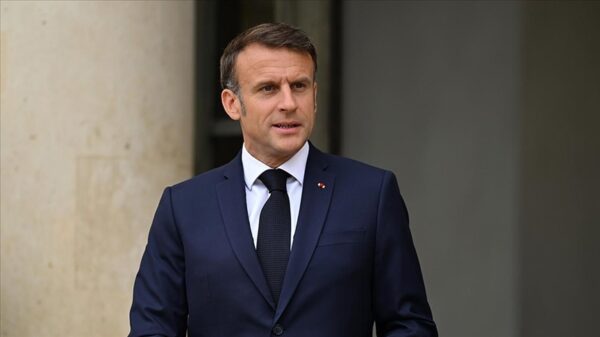
In a vote of no confidence, it appears that the French government will fail, triggering a political crisis for the second-largest economy in the eurozone. Prime Minister Francois Bayrou is expected to be ousted, casting doubt over President Emmanuel Macron’s future.
The vote on Monday is based on Bayrou’s unpopular budget plan for 2026, which aims to reduce France’s fiscal deficit. The 74-year-old political veteran, who called the vote himself in a bid to pressure lawmakers to back his plans, has been in office for only nine months.
In less than two years, France has had four prime ministers, and a fifth is unlikely to end the political impasse in the nation. The paralysis is similar to the instability last seen at the establishment of the Fifth Republic in 1958.
Speaking before the National Assembly, France’s lower house of parliament, on Monday afternoon ahead of the no-confidence vote, Bayrou warned MPs that the country’s economy was seriously threatened by its high level of debt.
It is anticipated that he will respond to inquiries from lawmakers.

What might occur next?
Lawmakers have been adamant for weeks that they will vote against Bayrou’s state-cutting budget. In the 577-seat National Assembly, opposition parties ranging from the extreme left to the far right control 330 members, which is more than enough to remove him.
Bayrou would remain in office until President Emmanuel Macron makes a decision if he loses Monday’s vote and the cabinet is overthrown.
Regretfully for the president, no one in France has been agreed upon to take Bayrou’s post.
The majority of experts anticipated that Bayrou would lose the election, necessitating that Macron find a replacement. But if the math in parliament stays the same, that runs the risk of just repeating what happened when Bayrou took over for Michel Barnier last year.
Macron, who is fiscally conservative, is unlikely to appoint a premier who supports increased state spending. But after the government recently tried to cut deals on the right of the political spectrum, some wonder if Macron might try something new.
The assistant professor of economics at the University of Paris VIII, Stefano Palombarini, claims that “the two previous appointments, Barnier and Bayrou, both failed.” In the process, he (Macron) lost a lot of credibility, and if he tried to take a similar centrist stance, he would lose even more.
“In this context, it would make the scenario of a relative opening towards the left possible,” Palombarini stated to WSN24 . Some Macronist, Socialist and Green politicians say they’re ready for compromises to form a government that lasts until 2027.”
Does this mean there is a clear political path?
Not really. According to an opinion poll this month for Le Figaro Magazine by the Verian Group, just 15 percent of the electorate has confidence in Macron, down 6 percentage points since July. However, the president has consistently denied any intention of stepping down. Separate surveys by Ifop, Elabe and Toluna Harris Interactive indicated that 56 to 69 percent of French people want snap parliamentary elections, indicating growing dissatisfaction with current party politics in a country run by minority cabinets since 2022.
“There’s general political malaise [in France] and also dissatisfaction specifically with Macron,” according to Palombarini.
Therefore, opinion polls are actually fairly stable overall. Indeed, the most recent polls indicate that voter intentions have not changed significantly over the past year. As a result, it is unlikely that a new prime minister will avoid the same fate as Bayrou.
What caused this situation to arise? Macron’s bold choice to hold early legislative elections last year is at the core of France’s political impasse.
That followed his 2022 reelection. In June 2024, Macron took a risk in an attempt to strengthen support for the political center.
However, French voters shifted to the extremes, which limited Macron’s capacity to enact laws and left him with a weak minority government.
Three factions were divided in the hung parliament as a result of the voting. Despite winning the most seats, a left alliance was well short of a majority.
Despite receiving the most votes, the far-right National Rally lacks a majority. Despite losing seats, Macron’s centrist coalition is still a sizable third group.
It is now difficult to rule France because of this parliamentary upheaval. Spending has been the area where divisions have been most noticeable.
Will there be increased traffic jams?
It is anticipated that this week will see a series of “Block Everything” street protests, which will be followed in the second half of September by union-led rail and hospital strikes.
France saw what became known as the “gilets jaunes,” or yellow vest, in 2018 and 2023.
Macron would try to prevent a recurrence of the antigovernment demonstrations against his domestic policies, according to analysts.
“Macron’s policies have been extremely unpopular since 2017.”
SOURCE : WSN24 AND NEWS AGENCIES