



BANGLADESH: Dialogue Calls for Collective Action to Strengthen Information Integrity and Social Cohesion in Bangladesh

wsn24 staff
456 Time View
Update :
Tuesday, August 18, 2026
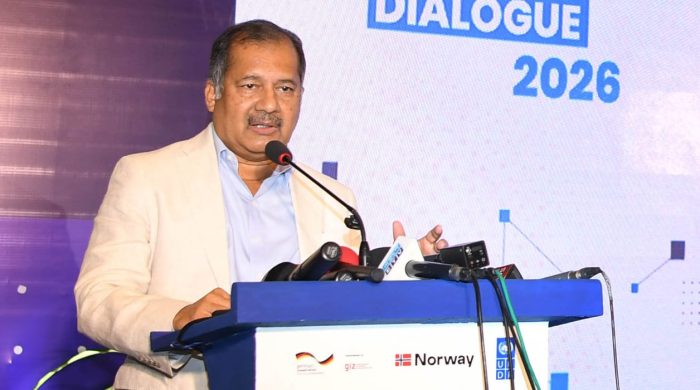
BANGLADESH (WSN24): A high-level policy dialogue in Dhaka today brought together govemment officials, policymakers, academicians, media representatives, development partners, fact-checkers and civil society actors to discuss growing challenges around misinformation, disinformation, Al-generated content and theirimplications for information integrity and social cohesion in Bangladesh.
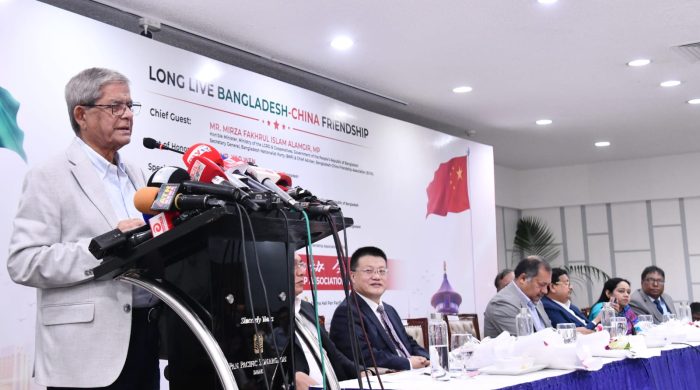
Organised by UNDP Bangladesh and its partners with support from the Government of Germany and the Government of Norway, the “Information Integrity and Social Cohesion Dialogue 2026: Policy, Platform Accountability and Collective Action” is being held at Pan Pacific Sonargaon, Dhaka.
Setting the context for the dialogue, Sheela Tasneem Haq, Senior Governance Specialist, UNDP Bangladesh, highlighted the rapidly evolving information ecosystem and the need to move from identifying misinformation towards building long-term resilience.
Addressing the dialogue as Chief Guest, Faqir Mahbub Anam, MP, Minister for Posts, Telecommunications and Information Technology, stressed the critical need for collective responsibility to build a trusted, inclusive, and resilient digital landscape. Не reaffirmed the government’s commitment to supporting policy frameworks and strengthening accountability to advance social cohesion and ensure the information environment remains beneficial to all citizens.
To navigate the rapidly changing information landscape effectively, the Minister called for swift, collaborative action among the govemment, print and television media, and various key stakeholders. He actively sought the cooperation of all parties involved to proactively address emerging challenges and work together toward building a more cohesive and resilient society.
A recent UNDP Bangladesh analysis revealed that over half of the online content examined contained false or misleading information, and more than 20% involved Al-generated or manipulated media. This increasingly complex digital landscape poses significant risks to offline public trust, social cohesion, and peace.
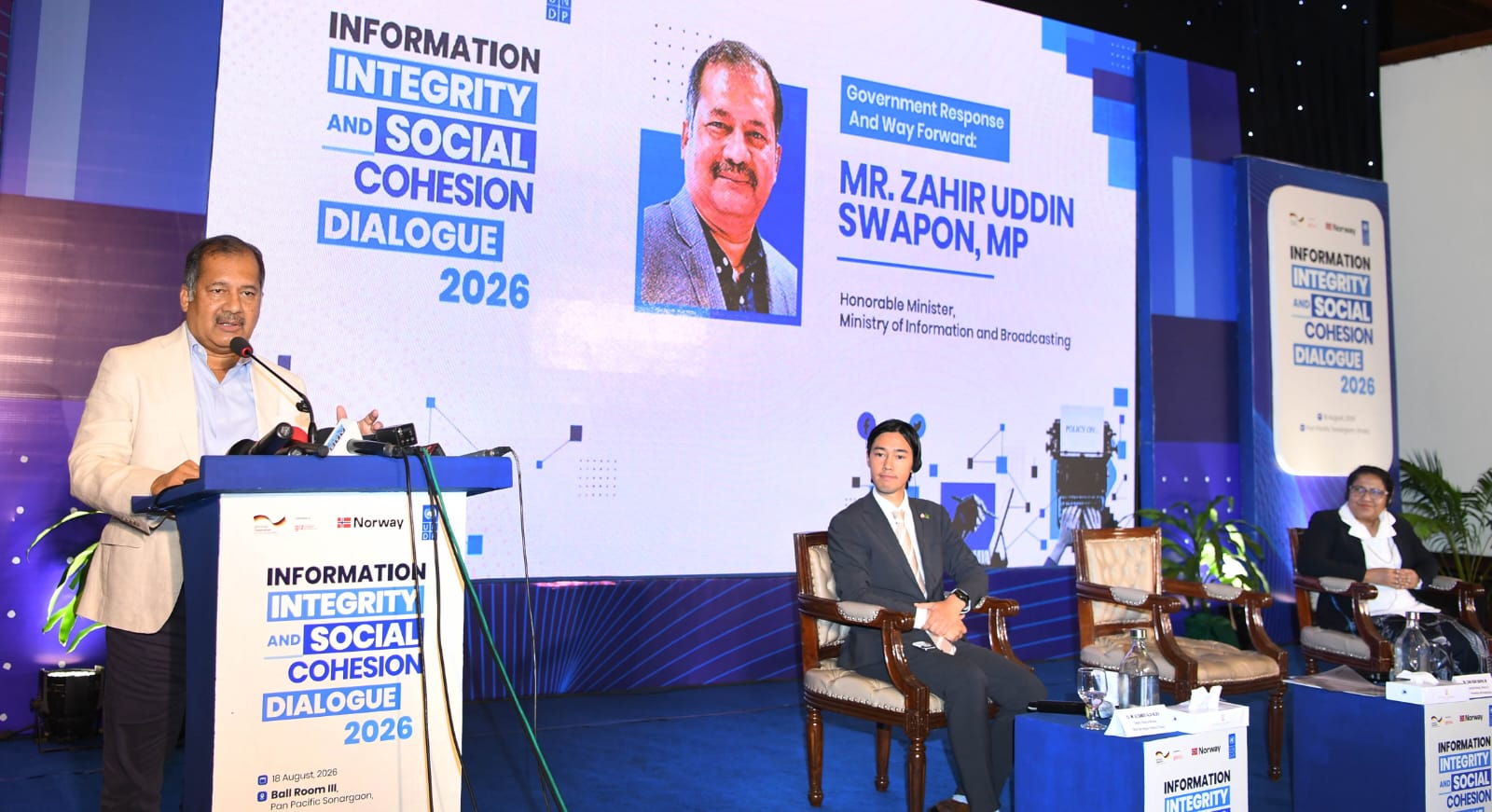
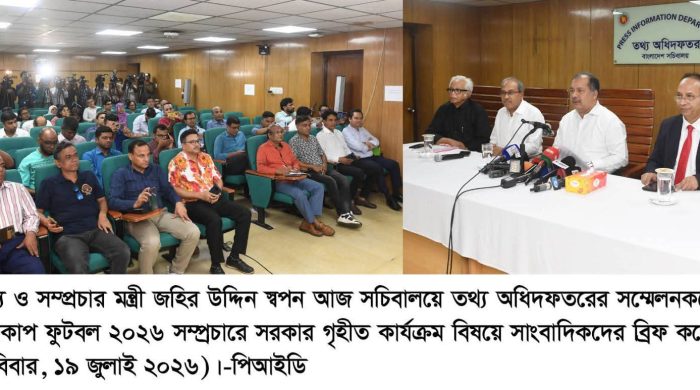
Speaking on the profound impact of emerging digital frontiers, Zahir Uddin Swapon, MP, Ministerfor Information and Broadcasting, outlined the urgent need for a unified approach to technological governance: “Artificial intelligence and digital technologies are no longer
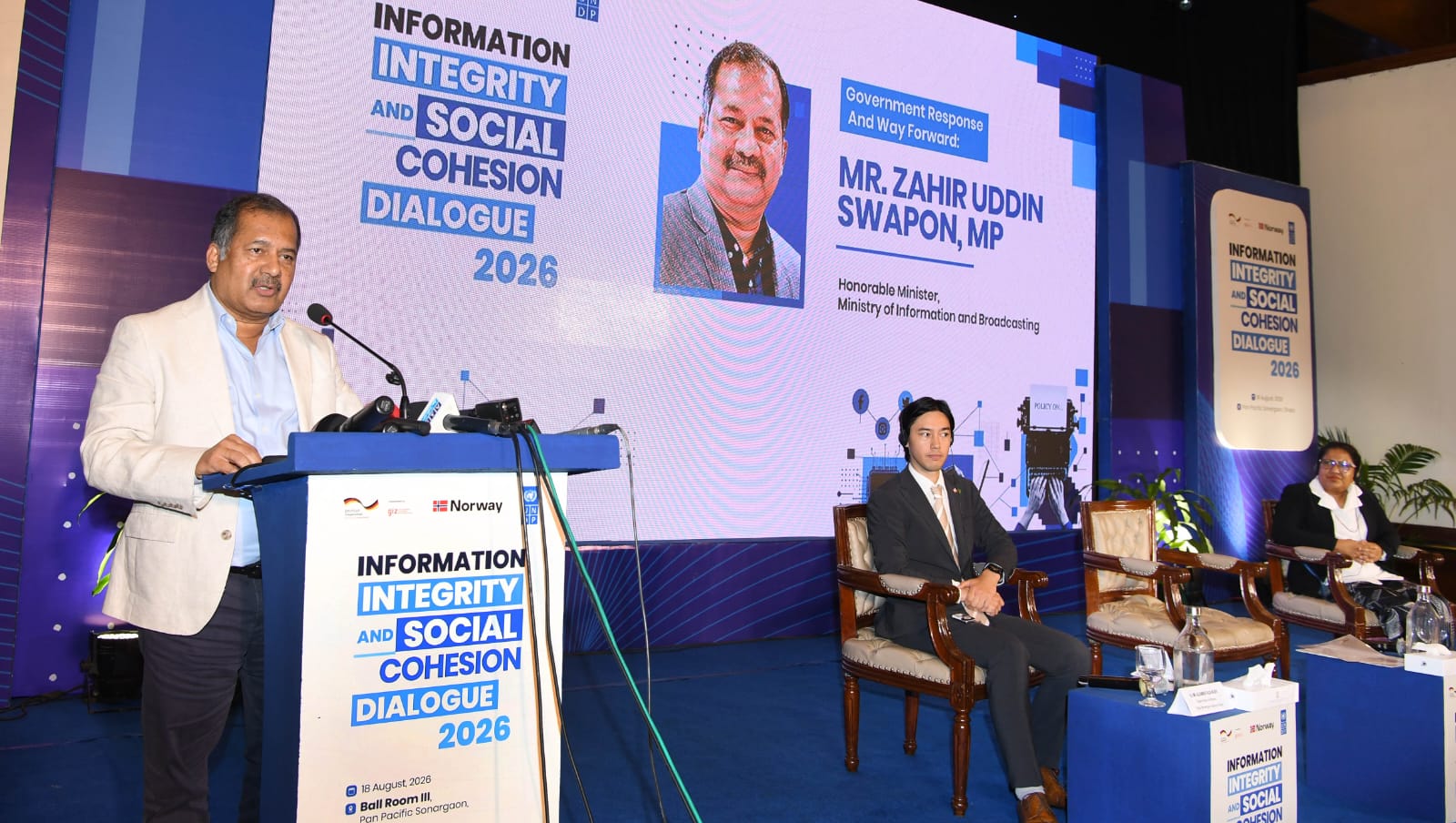
just tools; they representa brand-new ecosystem that is fundamentally transforming our socialfabric and daily lives. The complex challenges of this digital age cannot be solved in isolation by software engineers or tech giants alone. We cannot ignore this technological wave-we must engage with it actively. We must unite as a collective force to identify these challenges and establish robust, collaborative frameworks so that our citizens can safely live within the blessings of modern technology.”
The Minister further emphasized that the Govemment and the Ministry of Information and Broadcasting stand fully ready to work hand-in-hand with partners like the UNDP to research and build safeguards that protectcitizens from digital exploitation. He concluded with a strong call to transition immediately from dialogue to action by strengthening public trust, fortifying institutions, and developing highly adaptive mechanisms capable of securing Bangladesh’s rapidly evolving information environment.
To address these emerging risks, Stephen Rodriques, Resident Representative of UNDP Bangladesh, emphasized that the consequences of social media and Al-driven misinformation are fundamentally human. He urged digital platforms to build stronger Bangla-language capacity. He called for faster,coordinated responses-such as early-warning systems-while firmly advocating for the protection of freedom of expression, civic participation, and journalists’ safety.
Reflecting on the discussions in the closing segment, Sonali Dayaratne, Deputy Resident Representative, UNDP Bangladesh”, welcomed the key takeaways from the dialogue and highlighted the importance of strengthening institutions and advancing information integrity. Herdetailed remarks and takeaways will be reflected further in the event documentation.
Alexander Falck-Bilden, Deputy Head of Mission at the Royal Norwegian Embassy in Dhaka, speaking on behalf of Norway, emphasized that information integrity goes far beyond mere facts and data, serving as a corefoundation for the very kind of society we are trying to build. Warning that misinformation and disinformation actively threaten to disrupt social cohesion, he stressed the critical importance of developing a strategic roadmap for 2026 and beyond, while firmly reaffirming Norway’s commitment to working closely with Bangladesh and supporting efforts to translate these vital dialogues into concrete policy and action.
Mahfuz Anam, Editor and Publisher of The Daily Star, highlighted how the rise of social media has fundamentally democratized freedom of speech and shifted the dynamics of the information landscape away from the exclusive control of traditional media. However, he emphasized that this greater digital freedom carries a corresponding and significant weight of responsibility on the shoulders of content creators and consumers alike.
To address the critical and growing need for information integrity in this new era, Anam announced that The Daily Staris taking steps to combat misinformation by establishing a dedicated internal unit focused on fact-checking and verification.
During the three working sessions, participants established a comprehensive policy roadmap for Bangladesh, prioritizing the creation of an integrated national framework for information integrity, coordinated early-warning and reporting mechanisms, and greater platform accountability. To build long-term resilience, they urged expanding nationwide digital literacy, strengthening fact-checking, preparing institutions for Al-enabled risks, and combating technology-facilitated gender-based violence. Crucially, attendees emphasized that all resulting legal and regulatory responses must actively safeguard fundamental human rights, including freedom of expression, privacy, and media freedom.
The event convened a broad range of experts who guided the technical sessions. These included Md Mamunur Rashid Bhuiyan, Secretary; Nahid Sultana Mallik, Executive Director of Bangladesh Computer Council and DR.Md.Taibur Rahman, Director General, National Cyber Security Agency of ICT Division; Dr. M. Shehela Pervin, PPM, Additional DIG (Training-2), and General Secretary, Bangladesh Police Women’s Network (BPWN); Amb.Humayun Kabir, President of Bangladesh Enterprise Institute (BEI), Major General (Retd.) Md. Emdad-Ul-Bari, Chairman of Bangladesh Telecommunication Regulatory Commission, and Dr. Syed Muntasir Mamun, Director General (International Trade, Investment & Technology), Ministry of Foreign Affairs.
Further contributions came from Susan Vize, UNESCO Representative to Bangladesh, Andres Castillo, Chief Technical Adviser, UN Electoral Project Ballot, Michael Von Tangen Page, Technical Specialist- Research and Survey Analysis, EDITOR IN CHIEF WSN24 Zusfiqur Rohman, Faisal Bin Majid, Project Manager, UNDP, Anne Hagood, Peace and Development Advisor of UNRCO, Kazi Faisal Bin Seraj, Country Representative of The Asia Foundation, Ruzan Sarwar, Public Policy Manager for Bangladesh at Meta, Abu Sayed Sumon from UNFPA, Tanim Ahmed, Digital Editor, The Daily Star, Qadaruddin Shishir, Editor, The Dissent, Minhaj Aman, Research and Policy Lead, Activate Rights, and many more.
The dialogue concluded with a shared emphasis on moving from discussion to action, strengthening institutions and coordination, building public resilience and trust, and developing sustained mechanisms capable of responding to Bangladesh’s rapidly evolving information environment.
SOURCE: WSN24

আপনার মতামত লিখুন :
Leave a Reply
More News Of This Category




Our Like Page